Lemonade by AMD: a fast and open source local LLM server using GPU ...
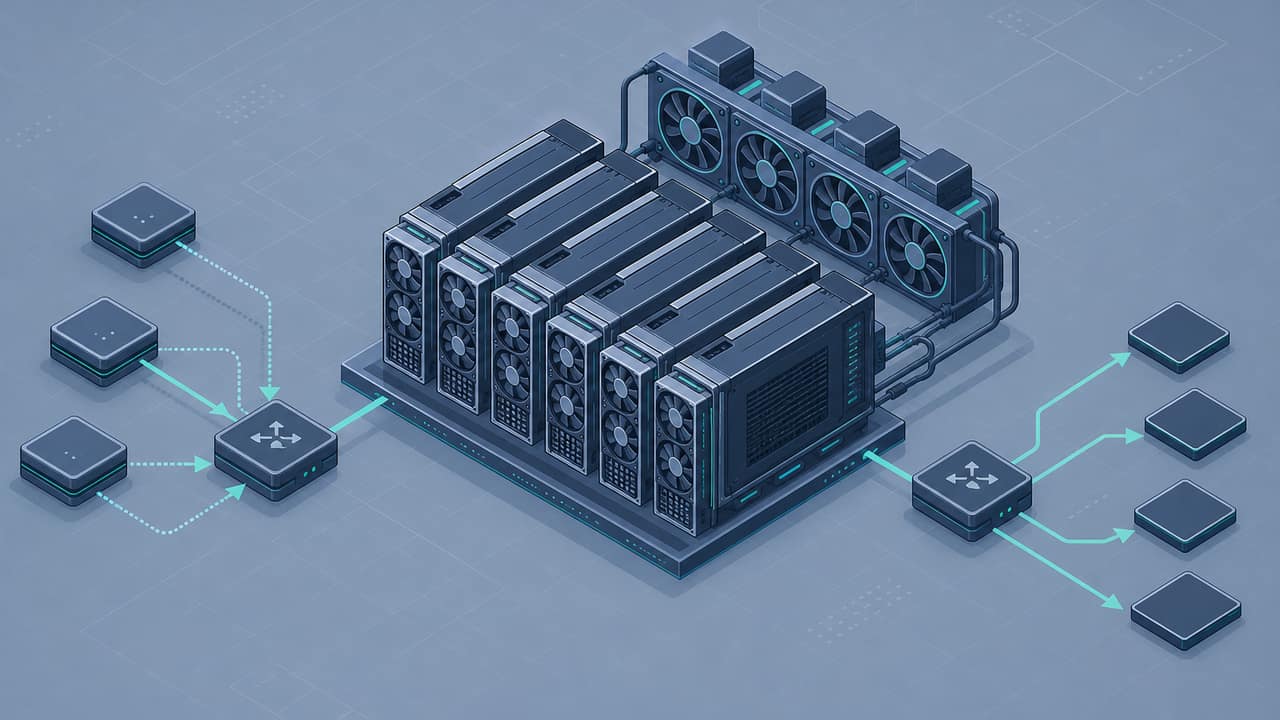
Lemonade by AMD: a Fast and Open Source Local LLM Server Using GPU and NPU
A practical local LLM server stops being “local” the moment it needs 18 seconds to answer a 20-token prompt. I have seen this pattern repeatedly on developer laptops: the model technically runs, CPU usage pins at 700%, fans spin up, and the first token arrives after the user has already lost context.
That is the engineering problem Lemonade is trying to solve: make local inference feel like a real service, not a demo script.
Lemonade by AMD is an open source local LLM server designed to run language models on client hardware, especially AMD systems with GPU and Ryzen AI NPU acceleration. The interesting part is not just “run a model locally.” We already have several ways to do that. The interesting part is the server shape: expose local models through an API, route inference through available accelerators, and make it usable from normal application code.
For engineers building local copilots, private document assistants, agent sandboxes, or offline inference workflows, this is the right abstraction. You do not want every application to know how to load a model, quantize weights, choose execution providers, pin memory, stream tokens, and manage sessions. You want a local inference service.
What Lemonade Is Actually For
At a high level, Lemonade is a local model server. It sits between your application and the hardware.
Instead of embedding inference logic directly in your app, you run a local daemon:
lemonade-server serveThen your application talks to it over HTTP, often through an OpenAI-style chat completions API:
from openai import OpenAI

client = OpenAI(
    base_url="http://localhost:8000/api/v1",
    api_key="not-needed-for-local"
)

response = client.chat.completions.create(
    model="llama-3.1-8b-instruct",
    messages=[
        {"role": "system", "content": "You are a concise coding assistant."},
        {"role": "user", "content": "Write a Python function to chunk text by tokens."}
    ],
    temperature=0.2,
    stream=True,
)

for chunk in response:
    delta = chunk.choices[0].delta.content
    if delta:
        print(delta, end="", flush=True)
The API shape matters. If your backend already supports GPT-5.5, Claude Sonnet 4.6, Gemini 3, or an open model endpoint, you can often point the same client abstraction at Lemonade for local execution. That lets you test model routing, privacy-sensitive features, and offline workflows without rewriting your app around a new SDK.
In practice, I treat a local LLM server as an infrastructure component:
App / IDE / Agent Runtime
        |
        | HTTP streaming chat API
        v
Lemonade local server
        |
        | model loader + scheduler
        v
Execution backend
        |
        | GPU / NPU / CPU fallback
        v
AMD client hardware
The clean separation is what makes this usable in real systems.
Why GPU and NPU Both Matter
Most engineers already understand why GPU acceleration matters for LLM inference: matrix multiplications dominate runtime, and GPUs are built for parallel arithmetic. The NPU part is newer and easier to misunderstand.
An NPU is not “a smaller GPU.” It is a specialized accelerator optimized for neural network operations under tight power and thermal constraints. On a laptop, that matters. The best local inference stack is not always the one that gets the highest peak tokens per second for a 30-second benchmark. It is often the one that stays responsive while the user has Slack, a browser, VS Code, and Docker running.
The useful mental model:
- GPU: better for larger models, higher throughput, heavier parallel compute.
- NPU: attractive for low-power, always-on, smaller or optimized models.
- CPU: reliable fallback, but usually poor latency for interactive LLM use.
- Hybrid systems: useful when routing work based on model size, quantization, and availability.
For example, a local assistant might use:
{
  "routes": {
    "autocomplete": {
      "model": "small-code-model",
      "device": "npu",
      "max_tokens": 64
    },
    "chat": {
      "model": "llama-3.1-8b-instruct-q4",
      "device": "gpu",
      "max_tokens": 1024
    },
    "summarization": {
      "model": "compact-instruct",
      "device": "auto",
      "max_tokens": 512
    }
  }
}
That is the pattern I like: do not pick one accelerator religiously. Pick the right execution target per workload.
Where Lemonade Fits Among Local LLM Servers
There are several mature local inference options now. Lemonade’s distinctive angle is AMD-first local acceleration, particularly for systems where the GPU and NPU are both part of the client platform.
| Tool | Best Fit | API Style | Hardware Focus | Common Trade-off |
|---|---|---|---|---|
| Lemonade | AMD local GPU/NPU serving | Local HTTP / OpenAI-like usage | AMD client hardware | Younger ecosystem than older servers |
| Ollama | Simple local model management | REST API | Broad CPU/GPU support | Less control over low-level execution |
| llama.cpp server | Portable quantized inference | REST / OpenAI-compatible modes | CPU, Metal, CUDA, Vulkan, others | Backend tuning can be manual |
| vLLM | High-throughput serving | OpenAI-compatible | Server GPUs | Heavier deployment footprint |
| LM Studio | Desktop local experimentation | GUI + local server | Consumer machines | Less automation-friendly for infra |
Lemonade is not a drop-in replacement for every inference stack. If you are serving hundreds of concurrent users from datacenter GPUs, vLLM-style continuous batching is usually the more relevant architecture. If you need broadest possible portability across random machines, llama.cpp remains hard to beat.
Lemonade becomes interesting when the target machine is an AMD laptop, workstation, or edge box and you care about a first-class local server rather than a one-off Python script.
A Practical Local Architecture
Here is a pattern that works well for local AI applications:
┌──────────────────────────────┐
│ Desktop App / Backend Service │
└───────────────┬──────────────┘
                │ OpenAI-compatible client
                v
┌──────────────────────────────┐
│ Local Model Gateway           │
│ - retries                     │
│ - model routing               │
│ - prompt templates            │
│ - telemetry                   │
└───────────────┬──────────────┘
                │ localhost HTTP
                v
┌──────────────────────────────┐
│ Lemonade Server               │
│ - model loading               │
│ - streaming responses         │
│ - device selection            │
│ - accelerator backend         │
└───────────────┬──────────────┘
                │
       ┌────────┴────────┐
       v                 v
   AMD GPU            Ryzen AI NPU
I usually add a thin gateway even when the local server already exposes a clean API. The gateway gives you a stable internal contract and lets you switch between local and remote models.
For example:
import os
from openai import OpenAI

def build_llm_client():
    if os.getenv("LLM_MODE") == "local":
        return OpenAI(
            base_url="http://localhost:8000/api/v1",
            api_key="local"
        )

    return OpenAI(
        base_url=os.environ["REMOTE_LLM_BASE_URL"],
        api_key=os.environ["REMOTE_LLM_API_KEY"]
    )

client = build_llm_client()
Then your app logic does not care whether the request goes to Lemonade, GPT-5.5, Claude Opus 4.8, Gemini 3, or a hosted open model. That flexibility is valuable when you are evaluating quality, latency, privacy, and cost. If your team uses a multi-model API provider such as AI Prime Tech for cloud fallback, keep the local path and remote path behind the same interface.
Model Selection: Smaller Beats Theoretical Intelligence
The most common mistake with local LLM servers is choosing a model because it looks good on a leaderboard rather than because it fits the machine.
For local inference, model fit is everything:
- Does the quantized model fit in available accelerator memory?
- Is the context length realistic for the workload?
- How long is time-to-first-token?
- Does it stream smoothly under normal laptop thermals?
- Can the app tolerate occasional CPU fallback?
- Is quality good enough for the task?
A 7B or 8B instruct model quantized to 4-bit is often more useful locally than a much larger model that constantly spills, stalls, or forces aggressive context trimming. For coding tasks, Qwen, DeepSeek, Llama, MiniMax, and Kimi-derived open models may all be reasonable candidates depending on license, format support, and backend compatibility.
The right workflow is empirical:
# Example benchmark flow; adapt names to installed Lemonade commands/models.
lemonade-server pull llama-3.1-8b-instruct-q4
lemonade-server serve --host 127.0.0.1 --port 8000
Then run a repeatable prompt:
import time
from openai import OpenAI

client = OpenAI(base_url="http://localhost:8000/api/v1", api_key="local")

prompt = "Explain how an LRU cache works, then implement one in Python."

start = time.perf_counter()
first_token_at = None
tokens = 0

stream = client.chat.completions.create(
    model="llama-3.1-8b-instruct-q4",
    messages=[{"role": "user", "content": prompt}],
    stream=True,
    temperature=0.1,
    max_tokens=400,
)

for chunk in stream:
    text = chunk.choices[0].delta.content or ""
    if text and first_token_at is None:
        first_token_at = time.perf_counter()
    tokens += len(text.split())

end = time.perf_counter()

print({
    "time_to_first_token_s": round(first_token_at - start, 3),
    "total_time_s": round(end - start, 3),
    "rough_word_rate_per_s": round(tokens / (end - start), 2)
})
This is not a scientifically perfect benchmark. It is a practical smoke test. It tells you what your user will feel.
Device Selection and Fallbacks
A good local server should make device selection explicit enough that engineers can reason about failures. “Auto” is convenient until a model silently moves from GPU to CPU and your latency jumps by 8x.
In production-like local deployments, I prefer config that is boring and inspectable:
{
  "server": {
    "host": "127.0.0.1",
    "port": 8000
  },
  "models": [
    {
      "name": "local-chat",
      "path": "./models/llama-3.1-8b-instruct-q4",
      "device": "gpu",
      "context_length": 8192
    },
    {
      "name": "fast-draft",
      "path": "./models/small-instruct-npu",
      "device": "npu",
      "context_length": 4096
    }
  ],
  "fallback": {
    "allow_cpu": false,
    "on_failure": "return_error"
  }
}
The exact Lemonade configuration surface may differ by version, but the principle holds: avoid invisible degradation. If the GPU path fails, I want the app to know. For interactive applications, returning a clear error is often better than making the user wait 90 seconds for a CPU response.
A common gotcha: drivers and runtime libraries matter as much as the model. When GPU or NPU acceleration does not engage, the server may still “work,” just slowly. Always verify the active execution provider in logs at startup.
Useful startup checks:
lemonade-server serve --log-level debugLook for:
loaded model: local-chat
selected device: gpu
execution provider: <accelerated backend>
context length: 8192
quantization: q4
If the logs do not clearly show the accelerator path, assume you have not validated acceleration yet.
Streaming Is Not Optional
For local LLM UX, streaming is a requirement. Even when total completion time is unchanged, streaming makes the app feel dramatically faster because the user sees progress.
Your server should support token streaming, and your client should consume it correctly:
def stream_answer(client, model, messages):
    stream = client.chat.completions.create(
        model=model,
        messages=messages,
        stream=True,
        temperature=0.2,
        max_tokens=700,
    )

    for event in stream:
        piece = event.choices[0].delta.content
        if piece:
            yield piece
In practice, streaming also helps you debug. If first token latency is high but generation is fast afterward, you may be bottlenecked on model load, prompt processing, or context length. If first token arrives quickly but generation crawls, you may be hitting memory bandwidth, thermal throttling, or CPU fallback.
Measure these separately:
- Cold start time: server start to model ready.
- Prompt processing time: request received to first token.
- Decode speed: first token to final token.
- End-to-end latency: application request to full response.
- Thermal stability: same test after five minutes of use.
The last one is easy to ignore and painful in real products.
Context Length: The Silent Latency Multiplier
Long context windows are useful, but they are not free. A model that supports an 8192-token or 32768-token context can still become unpleasant if you stuff every request with logs, documents, and chat history.
For local systems, I usually enforce context budgets at the gateway:
MAX_PROMPT_CHARS = 18_000

def trim_context(system_prompt, history, new_user_message):
    packed = [
        {"role": "system", "content": system_prompt},
        *history[-8:],
        {"role": "user", "content": new_user_message},
    ]

    total = sum(len(m["content"]) for m in packed)
    while total > MAX_PROMPT_CHARS and len(packed) > 2:
        removed = packed.pop(1)
        total -= len(removed["content"])

    return packed
This is crude but effective. A more mature version uses token counting, semantic compression, and retrieval. The important part is that context management belongs in your application layer, not as a vague hope that the server will stay fast.
If you are using a large-context model such as Fable 5 with a 1M context in a cloud setting, that changes the design envelope. On a local GPU/NPU system, you should assume context is expensive unless you have measured otherwise.
Best Practices for Lemonade-Style Local Serving
Keep the Server Warm
Cold model loading is one of the biggest UX killers. Start the server with the app, load the default model eagerly, and expose readiness separately from process health.
curl http://127.0.0.1:8000/health
curl http://127.0.0.1:8000/models
Your app should distinguish:
- server process is running
- model is loaded
- accelerator is active
- request path is healthy
Pin Model Versions
Do not let “latest” models silently change under a desktop app. Pin model names, quantization, and expected context length.
{
  "model": "llama-3.1-8b-instruct-q4",
  "revision": "2025-02-local-tested",
  "expected_device": "gpu"
}
Even small changes in tokenizer, chat template, or quantization can change behavior.
Separate Quality Tests From Speed Tests
A fast local model that gives subtly bad answers is worse than a slower one for many workflows. I like maintaining two test sets:
evals/
  latency_prompts.jsonl
  task_quality_prompts.jsonl
Example quality item:
{
  "id": "python_exception_summary_01",
  "messages": [
    {
      "role": "user",
      "content": "Summarize this stack trace and identify the likely bug: ..."
    }
  ],
  "must_include": ["None", "attribute", "guard"],
  "must_not_include": ["database outage"]
}
This is not a replacement for formal evaluation, but it catches regressions when you change model, quantization, or device path.
Design for Remote Fallback
Local inference fails in boring ways: laptop battery saver mode, driver updates, missing model files, unsupported quantization, thermal throttling. If the task matters, design fallback.
try:
    answer = call_local_model(messages, timeout_s=20)
except Exception:
    answer = call_remote_model(messages, timeout_s=30)
Be explicit with privacy. Some prompts should never leave the machine. For those, fail closed.
Limitations and Trade-offs
Lemonade’s promise is strongest on compatible AMD systems with the right runtime stack. That also means the operational surface includes hardware capability, driver state, model format support, and accelerator backend maturity.
The main trade-offs:
- Portability: AMD-focused acceleration is valuable, but heterogeneous fleets may need multiple backends.
- Model availability: not every open model will be packaged or optimized for every execution path.
- NPU constraints: NPUs are excellent for efficient inference, but not every model shape or context length is a natural fit.
- Observability: local servers need logs and metrics just like cloud services.
- Concurrency: one developer laptop is not a multi-tenant inference cluster.
The honest way to think about it: Lemonade is not magic capacity. It is a better local serving layer over finite client hardware. The performance win comes from using the right model, the right quantization, the right accelerator, and a server API that keeps those details out of your application.
Practical Takeaways
- Use Lemonade when you want an AMD-accelerated local LLM server rather than embedding inference directly in your app.
- Treat GPU, NPU, and CPU as different execution targets with different latency, power, and model-fit profiles.
- Prefer smaller quantized models that produce reliable interactive latency over larger models that barely fit.
- Validate acceleration through logs; a “working” server may still be running on CPU.
- Stream responses, measure time-to-first-token, and test under sustained thermal load.
- Put routing, fallback, prompt trimming, and privacy policy in your application gateway.
- Pin model versions and maintain small latency and quality eval sets before shipping local AI features.
One API key for Claude Opus 5.5, Sonnet 5, Haiku 4.5 and Fable 5.1, plus GPT-6 models. Pay as you go, no subscription.
Get Your API Key →